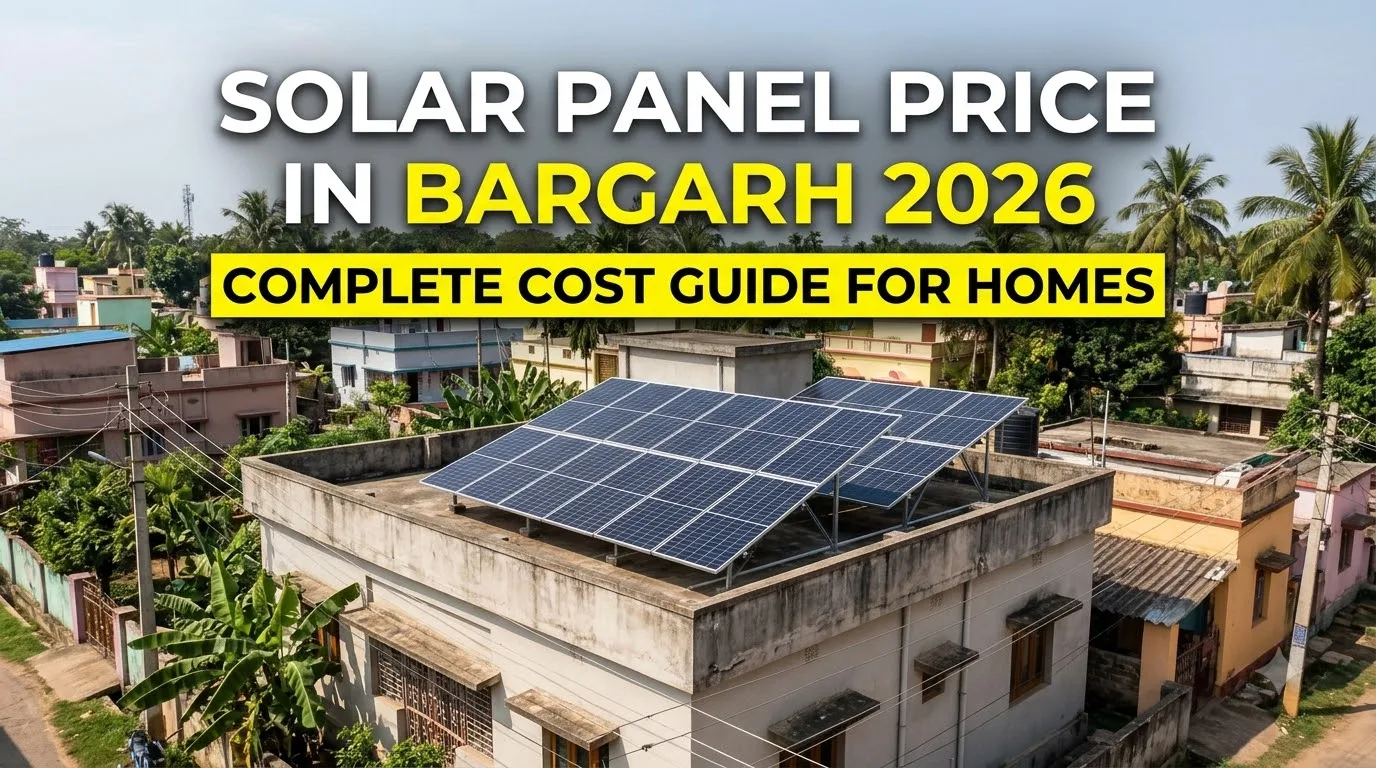
The first question every homeowner asks us is simple: what is the solar panel price in Bargarh? The honest answer is that it depends on the size of the system, the quality of the components and your roof. This guide gives you realistic ranges so you can plan your budget before you call anyone.
Key Takeaways
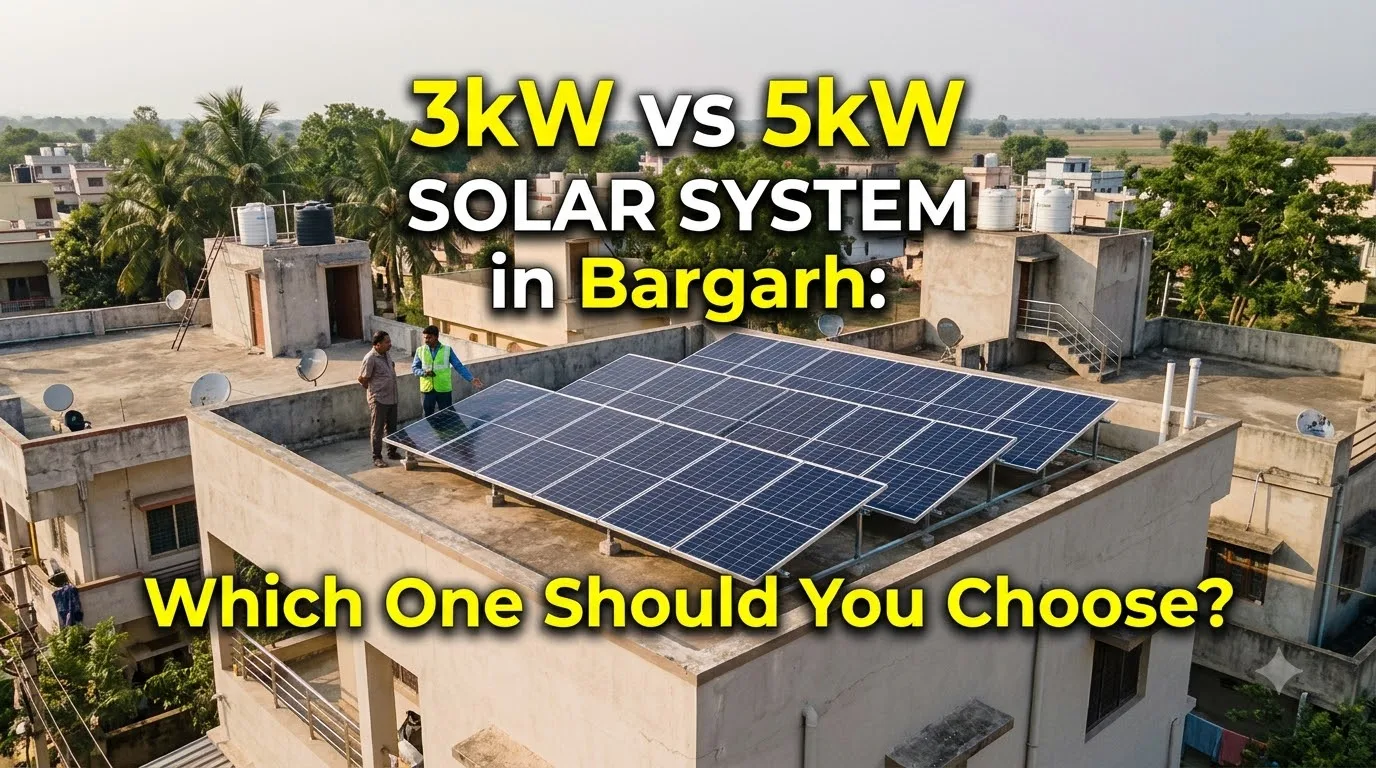
- A typical 3 kW on-grid rooftop system in Bargarh costs roughly ₹1.7–2.2 lakh and a 5 kW system roughly ₹2.8–3.6 lakh before subsidy.
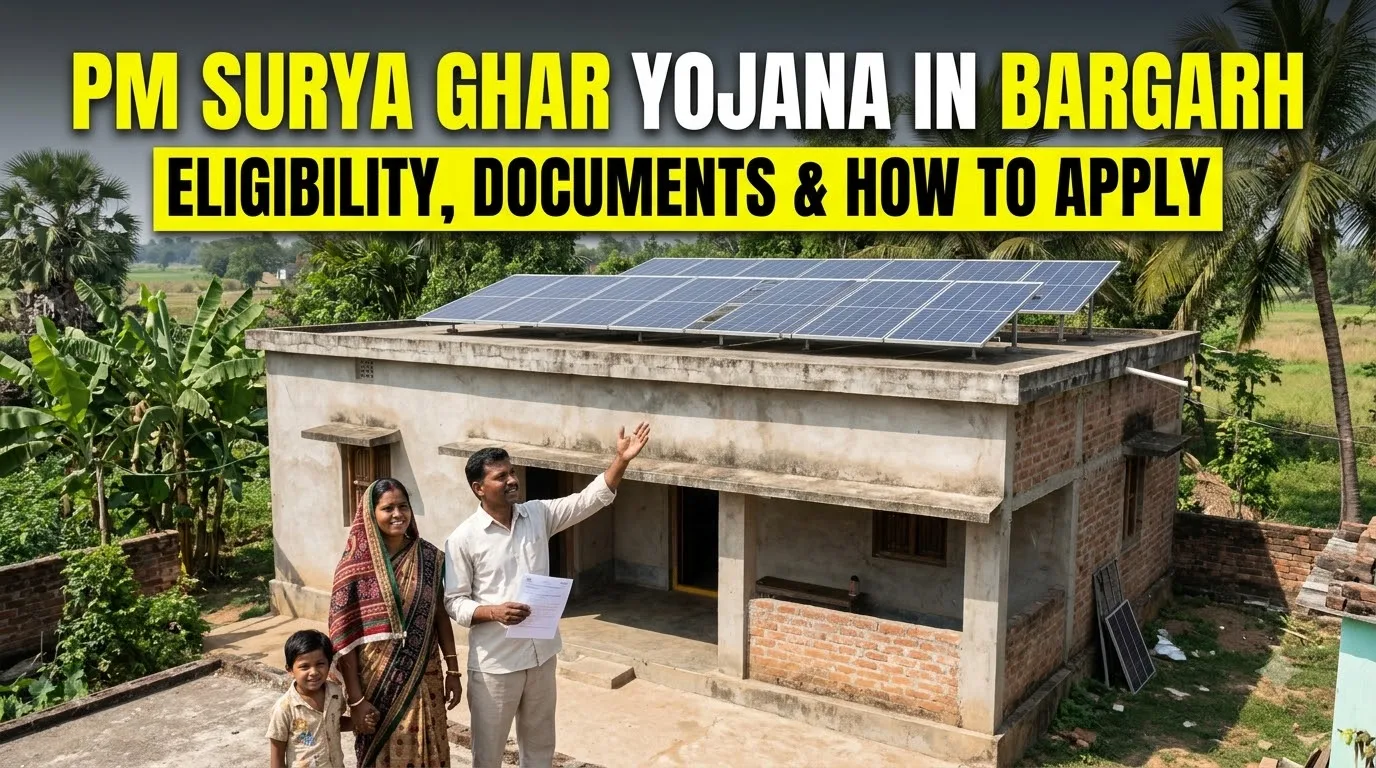
- Central subsidy under PM Surya Ghar is up to ₹78,000, and a state subsidy may also apply — so your real cost is much lower than the sticker price.
- Panel quality, inverter brand, roof type and structure height decide most of the price difference between two quotes.
- Each kW of solar generates roughly 4 units a day and needs about 100 sq ft of shadow-free roof.
- Always compare warranty, components and after-sales support — not just the total amount.
Solar panel price list by system size (approximate, 2026)
The table below gives indicative prices for a standard on-grid residential rooftop system in Bargarh and nearby areas such as Sambalpur. Actual quotes vary with brand, roof and market rates, so please use these as planning figures and request a written quote for your own home.
| System size | Approx. price (before subsidy) | Monthly generation | Roof area needed | Central subsidy* |
|---|---|---|---|---|
| 1 kW | ₹60,000 – ₹75,000 | ≈ 110–120 units | ≈ 100 sq ft | ₹30,000 |
| 2 kW | ₹1.2 – ₹1.5 lakh | ≈ 220–240 units | ≈ 200 sq ft | ₹60,000 |
| 3 kW | ₹1.7 – ₹2.2 lakh | ≈ 330–360 units | ≈ 300 sq ft | ₹78,000 |
| 5 kW | ₹2.8 – ₹3.6 lakh | ≈ 550–600 units | ≈ 500 sq ft | ₹78,000 (cap) |
| 10 kW | ₹5.5 – ₹7 lakh | ≈ 1,100–1,200 units | ≈ 1,000 sq ft | Not for single homes — commercial |
*Subsidy is for eligible residential consumers under the PM Surya Ghar Muft Bijli Yojana and is credited to your bank account after commissioning. State subsidy, if available, is extra and subject to guidelines. Prices are approximate and not a quotation.
What exactly are you paying for?
Many people think the “solar panel price” is only the cost of the panels. In reality a rooftop solar system is made of many parts, and the panels are only about half of the total cost. Knowing the breakup helps you judge whether a quote is fair.
- Solar panels (about 40–50% of cost) — the modules that convert sunlight into DC electricity. Wattage, technology (mono PERC, TOPCon, bifacial) and manufacturer decide the price.
- Solar inverter (about 10–15%) — converts DC into AC power for your home. String inverters are common; hybrid inverters cost more because they manage batteries as well.
- Mounting structure (about 8–12%) — hot-dip galvanised or aluminium frames that hold panels at the right tilt. A taller structure for terrace use costs more.
- Cables, DCDB/ACDB, earthing and lightning arrestor (about 8–10%) — the protection and wiring that keep the system safe.
- Net-meter, approvals and liaison (about 3–5%) — bi-directional meter, DISCOM feasibility, inspection and paperwork.
- Installation labour and commissioning (about 8–10%) — skilled engineers, testing and handover.
Factors that change the solar panel price in Bargarh
Panel technology and brand
Mono PERC panels are the most common choice for homes in Bargarh because they give a strong balance of efficiency and price. Newer TOPCon panels cost a little more but perform better in heat and low light and degrade more slowly. Polycrystalline panels are cheaper but are being phased out because they need more roof area per kW. Brands with strong local service and a bankable warranty usually cost more — and are usually worth it.
Inverter type and brand
A single-phase string inverter is enough for most 1–5 kW homes, while three-phase inverters are used for larger loads. Branded inverters with 5–10 year warranties cost more than unbranded ones, but the inverter is the most failure-prone part of any solar system, so this is not the place to save money.
Roof type and structure
A flat RCC roof is the easiest and cheapest to work on. Tin sheds, sloped roofs and elevated structures for shadow-free generation need extra fabrication and fixings. If you plan to use the terrace space below the panels, an elevated structure of 8–10 feet will add to the cost but gives you a useful covered area.
Distance from the meter and electrical work
The longer the cable run from your terrace to the inverter and meter, the higher the wiring cost. Old wiring or a weak earthing system may also need upgrading before solar can be connected safely.
Price after subsidy: a worked example for a Bargarh home
Let us take a family in Bargarh using about 350 units a month and installing a 3 kW on-grid system for roughly ₹2 lakh. The numbers below are illustrative only.
- System cost (approx.): ₹2,00,000
- Central subsidy under PM Surya Ghar (3 kW): ₹78,000
- Effective cost after central subsidy: about ₹1,22,000
- State subsidy, if available and eligible, is further reduction as per current guidelines
- Estimated yearly generation: about 4,000–4,300 units — worth roughly ₹22,000–₹26,000 a year at ₹5–6 per unit
- Estimated simple payback: roughly 4–6 years, after which the electricity is almost free for another 19+ years
On-grid vs hybrid vs off-grid: how the system type changes the price
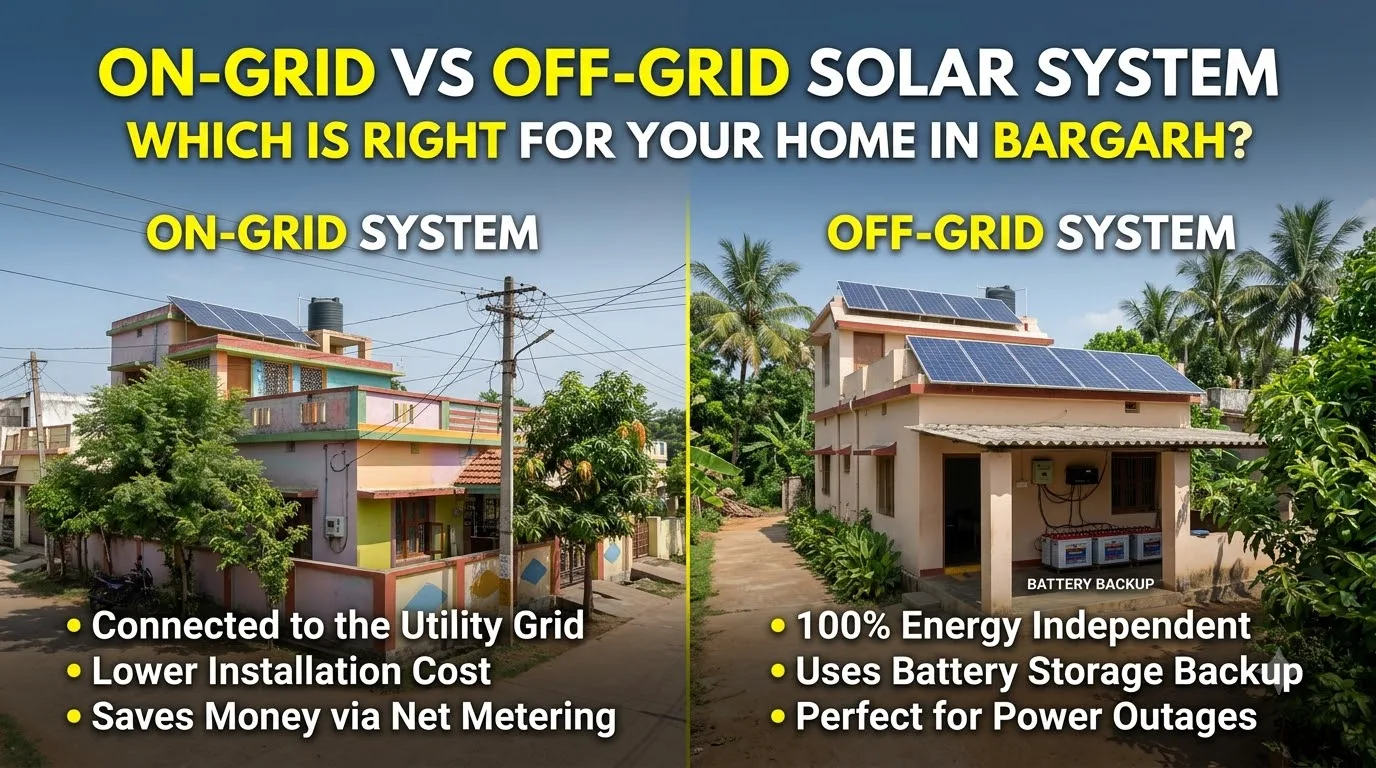
The biggest jump in price comes from adding batteries. An on-grid system with no battery is the cheapest per kW. A hybrid system adds a hybrid inverter and lithium or tubular batteries, which can add ₹80,000 to ₹2 lakh or more depending on backup hours. An off-grid system is priced similarly to a hybrid one. If you want to understand which one suits you, read our guide on on-grid vs off-grid solar systems or visit our page on on-grid and off-grid solar systems in Bargarh.
How to compare two solar quotes properly
Two quotes with the same kW size can differ by ₹30,000 or more. Here is a simple checklist to compare them fairly:
- Panel make, model and wattage — ask for the exact brand and whether they are DCR (domestic content) modules, which are required for the central subsidy.
- Number of panels — a 3 kW system should have the right count for the wattage (for example 6 × 540 Wp ≈ 3.24 kWp).
- Inverter brand, capacity and warranty — 5 years minimum, 10 years is better.
- Structure material and thickness — galvanised iron of proper thickness with a coating certificate, not thin painted pipes.
- Cable size and brand — undersized cables cause heat and power loss.
- What is included — net-metering, subsidy paperwork, earthing, lightning arrestor, transport and GST.
- Payment schedule — staged payments tied to progress, never full advance.
- After-sales plan — who will clean, inspect and repair the system, and how quickly.
Financing your solar system
If you do not want to pay the full amount at once, ask about options. Many banks offer low-interest loans for rooftop solar under government-supported schemes, and some families use a part of their savings and finance the rest. Since a good solar system saves ₹2,000 or more every month, the instalment is often close to what you save on your electricity bill. Confirm the current interest rate and eligibility with your bank before applying.
Common mistakes that raise your solar cost
- Buying a bigger system than your consumption needs
- Choosing the cheapest quote and paying later for replacements
- Ignoring shadow from water tanks, parapet walls, trees or neighbouring buildings
- Not checking whether panels qualify for the central subsidy
- Skipping a written warranty and service commitment
- Delaying installation — prices of quality components can change and subsidy rules can be revised
Get an exact quote for your roof
The only way to know your exact cost is a free site survey. Our team will check your roof, your electricity bills and your subsidy eligibility, and give you a transparent quote with no hidden charges. Contact Solar Harvest India or call +91-9438018877.
Frequently Asked Questions
A standard 3 kW on-grid rooftop system typically costs about ₹1.7 to ₹2.2 lakh before subsidy. Final price depends on the components and your roof.
With Solar Harvest India you receive a written quote that includes the structure, wiring, installation and net-metering support, so you know the full cost upfront.
A 3kW solar system in Bargarh costs roughly ₹1.7–2.2 lakh and a 5kW solar system in Bargarh roughly ₹2.8–3.6 lakh before subsidy.
Yes. The solar subsidy in Bargarh under PM Surya Ghar is up to ₹78,000 for eligible homes, and a state subsidy may also be available.
The panel and inverter prices are almost the same across Odisha, because they are set by national markets. The small differences come from transport, structure design, labour and the service quality of the company.
Yes, solar systems attract GST at the rate notified by the government. A good quote should clearly show whether GST is included in the price.
Solar equipment has become cheaper over the last decade, but subsidy rules and import duties can change. Since you start saving from day one, waiting usually means paying more electricity bills.
Maintenance is low. A yearly health check and periodic cleaning usually cost a small fraction of your yearly savings. Our team offers an annual maintenance plan — see our solar maintenance and support service.