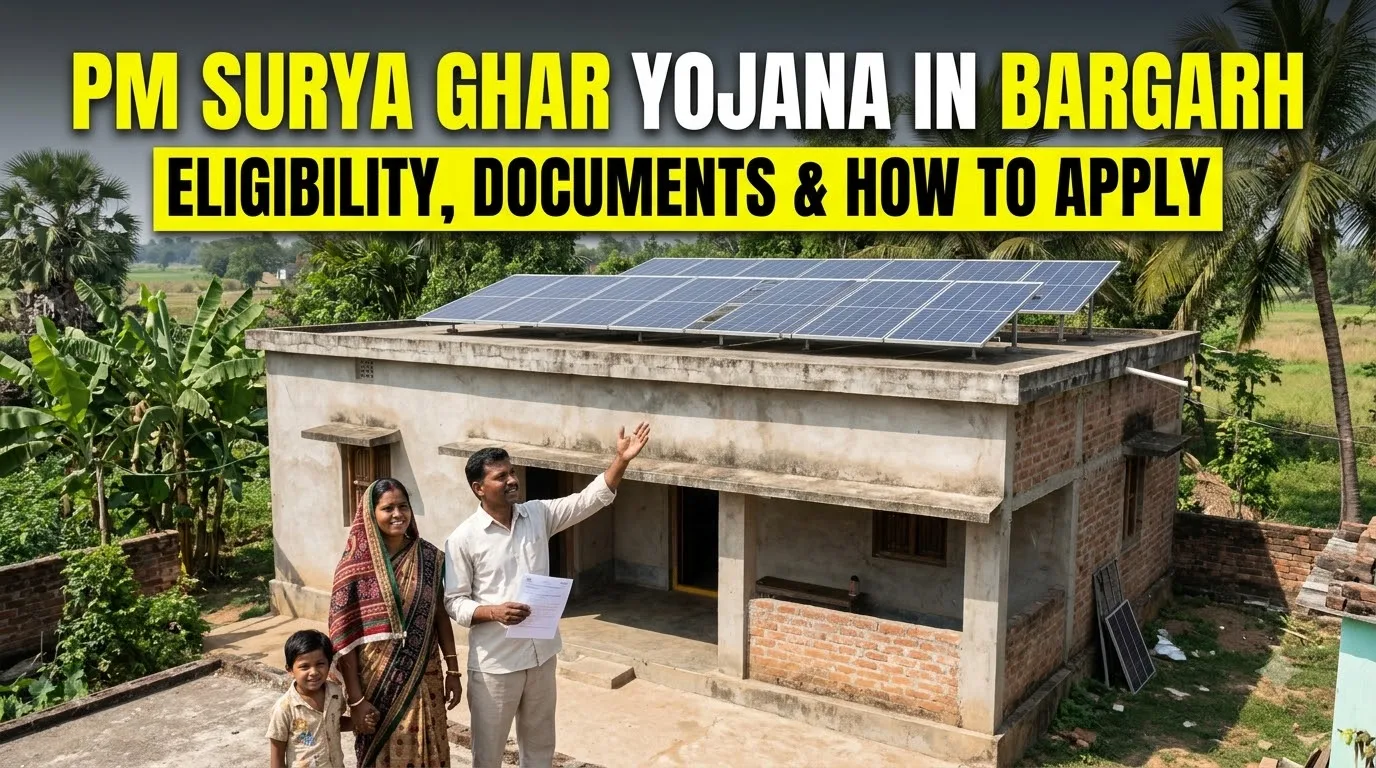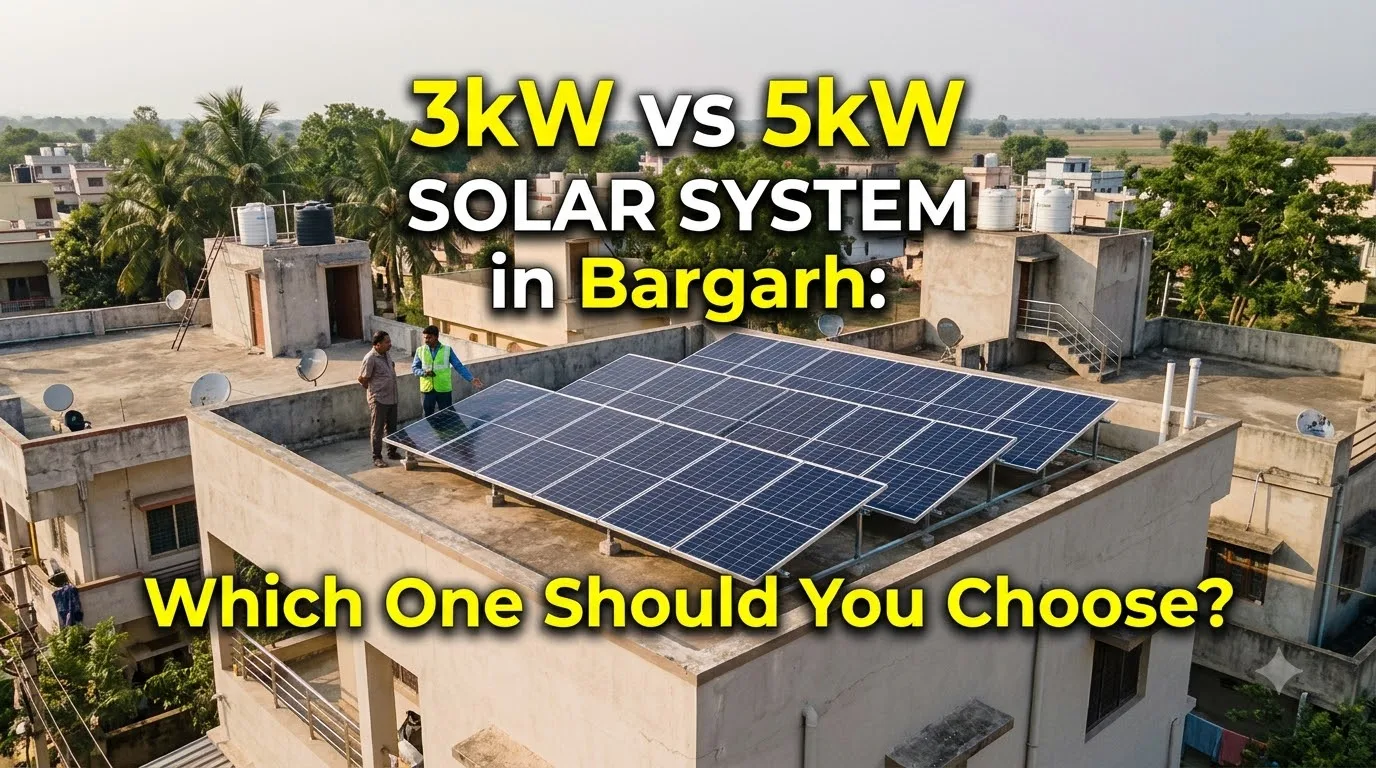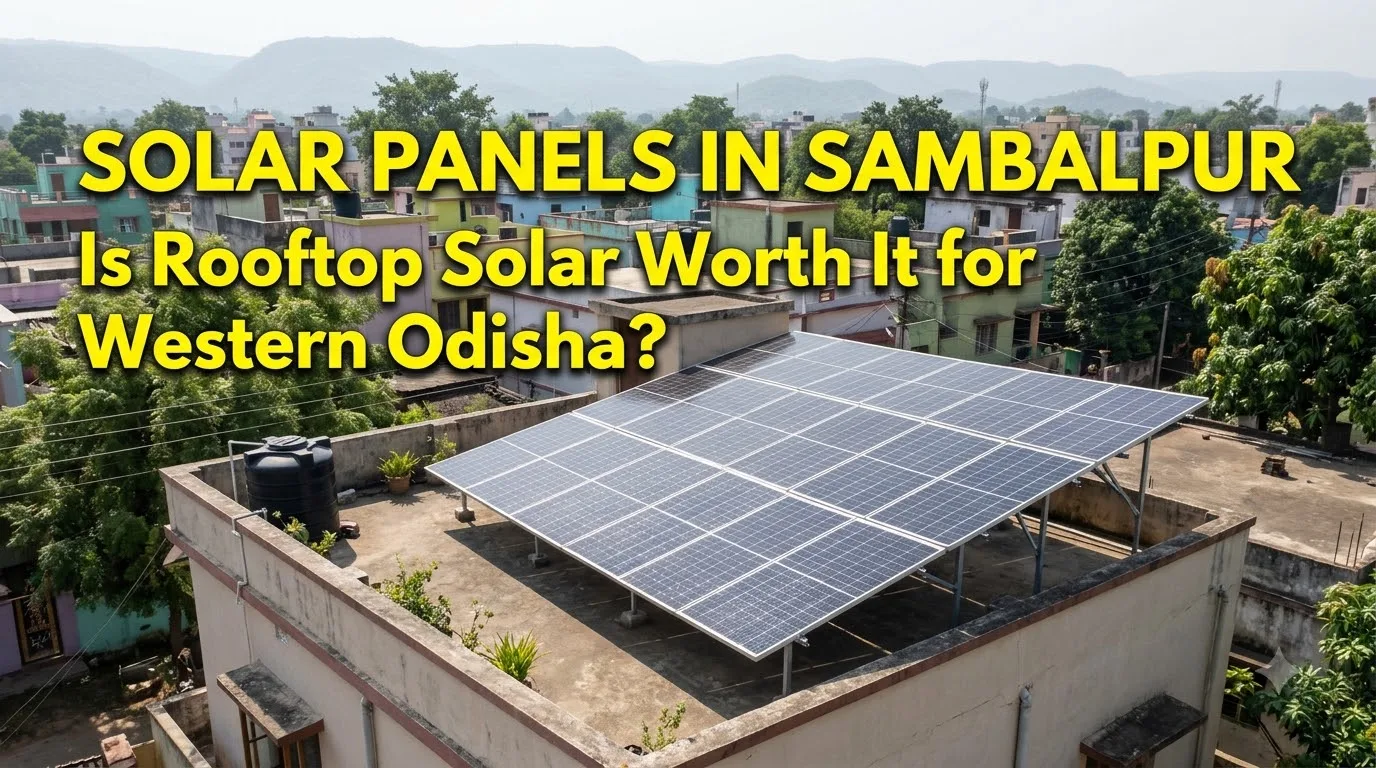
Western Odisha enjoys strong sunshine for most of the year, which makes Sambalpur a great place for rooftop solar. With central and state support, the numbers look even better.
Key Takeaways
- Sambalpur and Western Odisha receive strong sunshine, making rooftop solar a practical, high-return choice.
- A 3 kW home system can cut a 300–400 unit monthly bill by 70–90%; shops and clinics with daytime load save even more.
- The same PM Surya Ghar subsidy up to ₹78,000 applies in Sambalpur, and state support may be available too.
- Western Odisha homes are served by TPWODL, so net-metering and inspection follow the same DISCOM process as in Bargarh.
- Solar Harvest India serves Sambalpur from its Bargarh office with survey, installation and support.
Sambalpur’s climate and solar potential
Sambalpur lies in the western part of Odisha, with hot summers, a clear monsoon break and many bright days through the year. Rooftop solar performs best during the long dry months — roughly October to June — and still generates during the monsoon at lower levels. Because summers are hot and air-conditioning use rises sharply, solar output and electricity demand peak at about the same time, which is ideal for self-consumption.
Who benefits most from rooftop solar in Sambalpur?
| User | Suggested size | Why solar helps |
|---|---|---|
| Family home | 2–5 kW | Cuts household bills; subsidy up to ₹78,000 |
| Shop / showroom | 3–10 kW | Daytime load matches solar generation |
| Clinic / nursing home | 5–15 kW | Steady daytime power; backup with hybrid |
| School / coaching centre | 5–20 kW | Daytime classes; large roof space |
| Hostel / hotel | 10–30 kW | High consumption and hot-water needs |
| Small factory / workshop | 10 kW and above | Big bill savings; tax benefits |
Costs and savings for a Sambalpur home
Equipment prices are the same across the region, so costs in Sambalpur match those in Bargarh: roughly ₹1.7–2.2 lakh for a 3 kW and ₹2.8–3.6 lakh for a 5 kW system before subsidy. With the central subsidy of up to ₹78,000, the effective cost drops sharply. A family using about 350 units a month can expect savings of around ₹22,000–₹26,000 a year from a 3 kW system. Read the full solar panel price guide for a detailed breakup.
Net-metering and approvals in Western Odisha
In Sambalpur, Bargarh and surrounding districts, the distribution company is TPWODL. Net-metering involves feasibility approval, installation by a registered vendor, inspection and replacement of your meter with a bi-directional one. A local installer who regularly deals with the same offices can reduce delays. We explain the steps in our guide on how to apply for PM Surya Ghar.
Solar beyond rooftops: pumps, heaters and street lights
- Solar water heaters for homes, hostels and hotels — see solar water heater.
- Solar water pumps for farms and orchards around Sambalpur — see solar water pump.
- Solar street lights for colonies, campuses and roads — see solar street light.
- Hybrid systems for places with frequent outages — see solar hybrid system.
Challenges and how to handle them
- Dust and pollution near industrial belts — plan regular cleaning every 2–3 weeks.
- Monsoon generation dip — expected; yearly averages still deliver the savings.
- Shadow from nearby high-rise — a site survey will check this before you invest.
- Power cuts — if outages are long, consider a hybrid system.
How Solar Harvest India serves Sambalpur
Our team travels from Bargarh to Sambalpur for free site surveys, installation and after-sales service. We help with portal registration, documentation and subsidy follow-up. Visit our pages on solar company in Sambalpur and solar panel installation and rooftop solar in Sambalpur, or call +91-9438018877 to book a visit.
Month-by-month solar generation guide for Sambalpur
| Month | Units/kW/day | Comment |
|---|---|---|
| January | 4.2 | Clear and cool |
| February | 4.6 | Rising sunshine |
| March | 5.0 | Very good |
| April | 5.2 | Peak season |
| May | 5.0 | Peak, hot; keep panels clean |
| June | 3.8 | Monsoon begins |
| July | 3.0 | Lowest output |
| August | 3.0 | Cloudy and rainy |
| September | 3.4 | Recovering |
| October | 4.0 | Good again |
| November | 4.2 | Clear skies |
| December | 4.0 | Steady output |
These are illustrative averages for planning; they are not a guarantee. Actual generation depends on weather, shadow, dust and the quality of installation.
Three illustrative scenarios for Sambalpur users
- Home with 300 units a month: a 3 kW system offsets most of the usage; savings of roughly ₹1,800–₹2,200 a month at ₹5–6 per unit.
- Medical store or clinic using 700 units mainly in the day: a 6–7 kW system can cover a large share of daytime power.
- Hostel with a large hot-water demand: a combination of rooftop solar and a solar water heater can reduce power cost substantially.
Is rooftop solar worth it in Sambalpur? A balanced view
In most cases yes — particularly for homes using more than 200 units a month and for businesses with daytime loads. The factors that can reduce the benefit are heavy shadow on the roof, very low consumption, or a short stay in the house. A free survey will tell you honestly whether solar is the right choice before you commit.
Solar service for Sambalpur
Solar Harvest India serves Bargarh, Sambalpur and nearby towns. We offer a free site survey, installation, net-metering and after-sales support. Visit our solar company in Sambalpur page or contact us.
Frequently Asked Questions
Yes. We serve Sambalpur and nearby areas of Western Odisha from our Bargarh office.
Yes. Even a 2 kW system can offset a large part of your bill, and subsidy makes it affordable.
If you own the roof, no. For shared roofs or rented homes you will need consent from the owner or association.
Solar Harvest India serves as a solar company in Sambalpur area, offering rooftop solar in Sambalpur and solar panel installation in Sambalpur from its Bargarh office.
Sambalpur is close enough for our team to reach quickly for surveys and service within a short drive.
Yes. Flat RCC roofs are ideal. A shadow-free area of about 100 sq ft per kW is all you need.
It works at reduced output during cloudy days. Over a full year the system still delivers the expected average generation.