Odisha is moving fast towards clean energy. Strong sunshine, supportive policy and rising power needs make rooftop solar a practical choice for households, farms and industries across the state.
Key Takeaways
- Odisha combines strong sunshine, large open land, rising electricity demand and supportive state and central policy.
- Homes can use PM Surya Ghar (up to ₹78,000); farmers can use solar pump schemes; businesses can use net-metering and depreciation benefits.
- Rooftop solar is the fastest-growing segment because it needs no land and saves money from day one.
- Choose a local, subsidy-experienced solar company for a smooth experience.
Odisha’s solar advantage: sunshine, land and demand
Odisha receives good solar radiation across most districts, with Western Odisha enjoying many clear days. The state has ample open land and large rooftops in towns, a growing industrial base and a rising demand for electricity. All of these factors support both rooftop solar and larger solar parks. Using the sun reduces dependence on coal-based power and helps stabilise energy costs for households and businesses.
Major government schemes and policies that support solar
| Scheme / policy | Who it helps | Benefit |
|---|---|---|
| PM Surya Ghar Muft Bijli Yojana | Households | Central subsidy up to ₹78,000 on rooftop solar |
| State rooftop solar support | Eligible households | Additional state subsidy as per guidelines |
| Net-metering policy | Homes, shops, industries | Export surplus units and reduce bills |
| PM-KUSUM and solar pump programmes | Farmers | Subsidised solar pumps and solar irrigation |
| Renewable energy policy of the state | Developers and industry | Encourages solar parks and green power |
| Accelerated depreciation | Businesses | Tax benefit on solar investment as per income-tax rules |
Schemes and amounts change. Verify the latest details before applying.
Solar for farmers: powering irrigation
Agriculture is the backbone of districts such as Bargarh and Sambalpur. Diesel pumps are costly and polluting, and electric pumps depend on supply hours. A solar water pump runs free of fuel, works during daylight when crops need water, and may be eligible for subsidy support. Learn more at our solar water pump page.
Solar for industries and institutions
Factories, rice mills, cold stores, hospitals, hotels, colleges and offices consume large amounts of daytime power. Large rooftops can host 50 kW to several hundred kW of solar. The savings are significant, and combined with accelerated depreciation the investment often pays back quickly. Read about our industrial solar power systems.
Solar for public spaces: streets, schools and villages
Solar street lights bring light to roads and villages without trenching or monthly bills, and solar systems on school and panchayat buildings reduce public expenses. See our solar street light service.
Challenges for solar growth — and how to overcome them
- Awareness — many families still do not know about the subsidy; education like this guide helps.
- Quality and trust — choose a vendor with real references and warranty.
- Upfront cost — use subsidy and bank loans to spread it out.
- Approvals — work with a vendor experienced with the local DISCOM.
What this means for families in Bargarh, Sambalpur and across Odisha
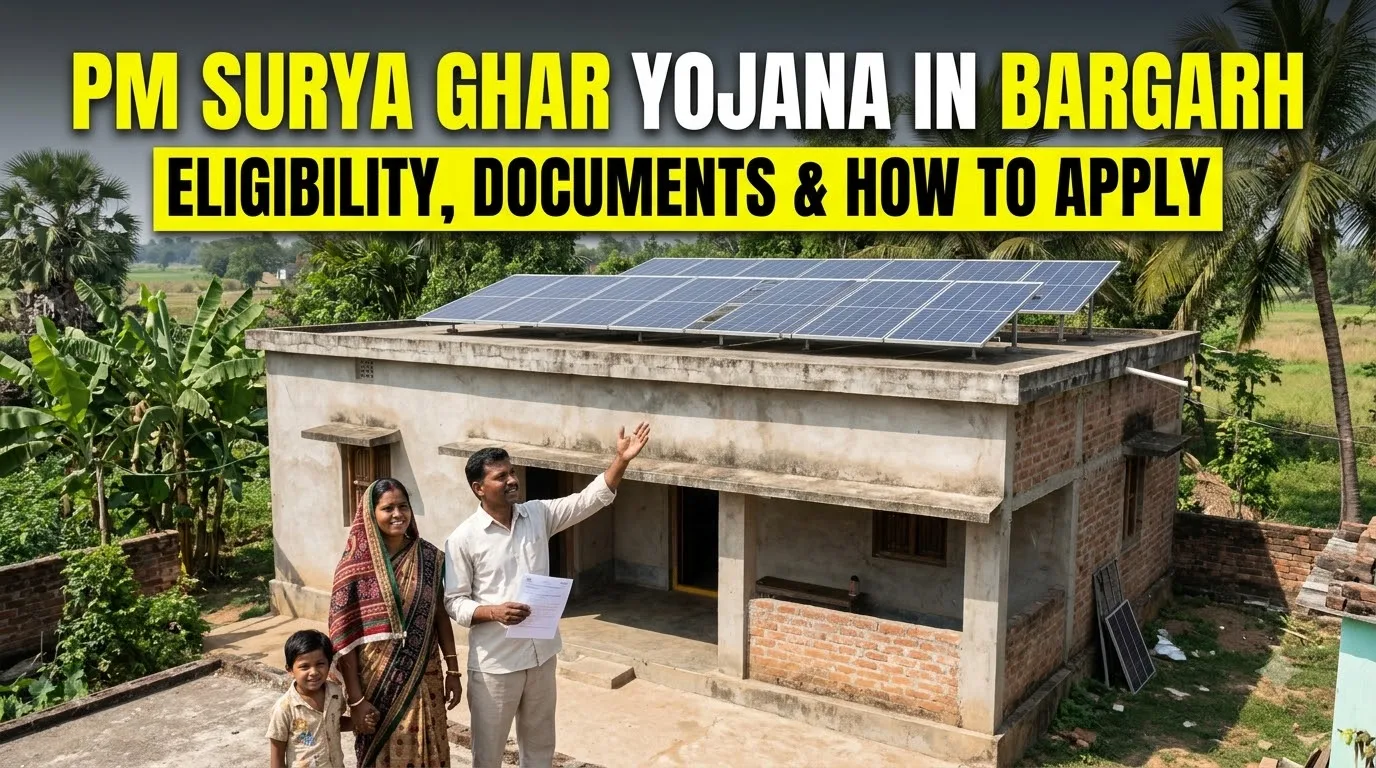
The policy environment is supportive and the technology is proven. The best time to go solar is when you have both a stable roof and the subsidy available. If you want help, see our pages for solar company in Odisha, PM Surya Ghar Yojana in Bargarh, and our detailed subsidy guide.
Solar technology basics: why it works so well today
Modern solar panels have become far more efficient and far cheaper than a decade ago. Advances in cell technology such as mono PERC and TOPCon, better inverters with MPPT tracking, and mass production have brought the cost of solar electricity below the retail price of grid power for many consumers. Because panels have no moving parts, they work quietly for 25 years or more.
Climate-resilient solar design for Odisha
- Strong structures designed for high winds during storm season.
- Anti-corrosion materials such as hot-dip galvanised steel, especially near the coast.
- Lightning and surge protection for thunderstorm-prone months.
- Proper drainage and waterproofing around fixings on roofs.
- Easy access for cleaning to control dust and bird droppings.
Jobs, local economy and the green transition
Solar is not only about saving on electricity. It creates local jobs in installation, maintenance and electrical services, and keeps energy spending within the community. When families in towns like Bargarh and Sambalpur install rooftop solar, they also support skilled technicians and local businesses.
Solar Harvest India across Odisha
Based in Bargarh, we serve homes and businesses across Western Odisha and beyond. Visit our solar company in Odisha page or get in touch.
Frequently Asked Questions
The central PM Surya Ghar subsidy applies across India, including all districts of Odisha, for eligible residential users.
Yes. Industrial rooftops can generate large savings. See our industrial solar power systems.
Well-designed structures with proper anchoring can withstand strong winds. In very severe cyclone alerts, follow official safety advice.
Pick a solar company in Odisha with local presence, subsidy experience, quality components and real after-sales support. Verify claims in writing.
Yes. Most districts get good sunshine. Coastal humidity and cyclone-prone zones need stronger mounting and anti-corrosion design, which good installers provide.
A shop can install rooftop solar to cut daytime electricity cost and may use net-metering and tax benefits.