It is the first question almost everyone asks: is solar worth it in Odisha? The honest answer is that for most homes using more than 200 units a month, and for most businesses with daytime load, solar in Odisha is worth it — often with a payback of about four to six years and decades of savings after that. But it is not worth it for everyone, and a good decision needs numbers, not slogans. This guide gives you real figures, simple formulas, worked examples and the situations where solar in Odisha may not make sense, so you can decide with confidence.
Key Takeaways
- For most homes using 200+ units a month, solar in Odisha is worth it, with simple payback of roughly 4–6 years after subsidy.
- A 3 kW system can save about ₹22,000–₹26,000 a year at an effective tariff of ₹5–6 per unit.
- Over 25 years a 3 kW plant can generate roughly 95,000–100,000 units — several times its cost in value.
- Solar in Odisha is least attractive with very low consumption, heavy shadow or a short stay in the property.
- Always check your own bills, roof and subsidy eligibility before deciding.
The short answer: is solar worth it in Odisha?
For the majority of households and businesses, yes. Three facts make solar in Odisha worth it: sunshine is strong for most of the year, electricity costs keep rising, and subsidies and falling equipment prices have reduced the upfront cost. Together they produce a simple payback of a few years and a very long period of near-free power afterwards.
The longer answer depends on your consumption, your roof, your tariff, the system you choose and the subsidy you can claim. The sections below walk through each of these so you can calculate whether solar in Odisha is worth it for you.
How to calculate if solar is worth it in Odisha
- Find your monthly units — average the last 6–12 bills.
- Estimate the system size — monthly units ÷ 30 ÷ 4 = kW needed (for example 360 ÷ 30 ÷ 4 = 3 kW).
- Get the installed price — about ₹55,000–₹75,000 per kW for standard on-grid systems.
- Subtract subsidy — up to ₹78,000 for eligible homes with 3 kW or more.
- Estimate yearly savings — kW × about 1,400 units per year × your effective tariff.
- Divide cost by savings — that is your simple payback in years.
Use an effective tariff that includes fixed and other charges, usually higher than the basic energy charge on your bill.
Savings by electricity bill: solar in Odisha examples
| Monthly units | Suggested system | Approx. cost after central subsidy | Yearly saving | Simple payback |
|---|---|---|---|---|
| 150 units | 1–2 kW | ₹40,000 – ₹90,000 | ₹9,000 – ₹15,000 | ≈ 4.5 – 6 years |
| 250 units | 2–3 kW | ₹75,000 – ₹1.4 lakh | ₹15,000 – ₹23,000 | ≈ 4.5 – 6 years |
| 350 units | 3 kW | ₹92,000 – ₹1.42 lakh | ₹22,000 – ₹26,000 | ≈ 4.5 – 5.5 years |
| 500 units | 4–5 kW | ₹1.6 – ₹2.8 lakh | ₹30,000 – ₹42,000 | ≈ 5 – 6.5 years |
| 650 units | 5 kW | ₹2.0 – ₹2.8 lakh | ₹38,000 – ₹44,000 | ≈ 5 – 6.5 years |
Illustrative numbers for solar in Odisha. Your actual savings depend on your tariff slabs, usage pattern, shadow, cleaning and component quality.
25-year view: the real value of solar in Odisha
A solar plant is a 25-year asset. Looking only at payback misses the biggest benefit — the long stretch of savings after the plant has paid for itself. Panels generate a little less every year (about 0.5–0.7%), but still produce most of their original output at year 25.
| Item | Approximate figure |
|---|---|
| Cost after central subsidy | ≈ ₹1.2 – ₹1.4 lakh |
| Inverter replacement once, plus maintenance | ≈ ₹30,000 – ₹50,000 |
| Total outlay over 25 years | ≈ ₹1.5 – ₹1.9 lakh |
| Units generated over 25 years | ≈ 95,000 – 100,000 |
| Effective cost per unit | ≈ ₹1.5 – ₹2.0 |
| Grid cost per unit (assumed) | ≈ ₹5 – ₹6 and rising |
| Estimated lifetime saving | Several lakh rupees |
Illustrative only. If grid tariffs rise, the saving from solar in Odisha grows. If they fall or you move, results change.
Who benefits most from solar in Odisha?
| User | Why |
|---|---|
| Family homes using 200–600 units | Large bill reduction and subsidy |
| Shops, showrooms, clinics | Daytime load matches solar generation |
| Schools, colleges, hostels | Large roofs, daytime use, hot-water savings |
| Farms with diesel or limited-hour pumps | Big fuel and time savings |
| Rice mills, cold stores, workshops | High motor load in daytime |
| Homes planning to add ACs or an EV | Future load makes solar more valuable |
When solar in Odisha may not be worth it
Being honest matters. Solar in Odisha may not be a good investment when:
- Your consumption is very low, for example below 80–100 units a month
- Your roof is heavily shaded all day by tall buildings or trees that cannot be removed
- You will move or sell the property very soon and the buyer will not pay for solar
- You live in rented premises without the owner’s consent
- You plan a major roof rebuild or extra floor soon, which would force removal of the plant
- The quote is from an unreliable company using poor components — the plant may then underperform
A free site survey will tell you honestly whether solar in Odisha is worth it for your roof. A good company will say no when the numbers do not work.
Subsidy: the factor that tips the numbers
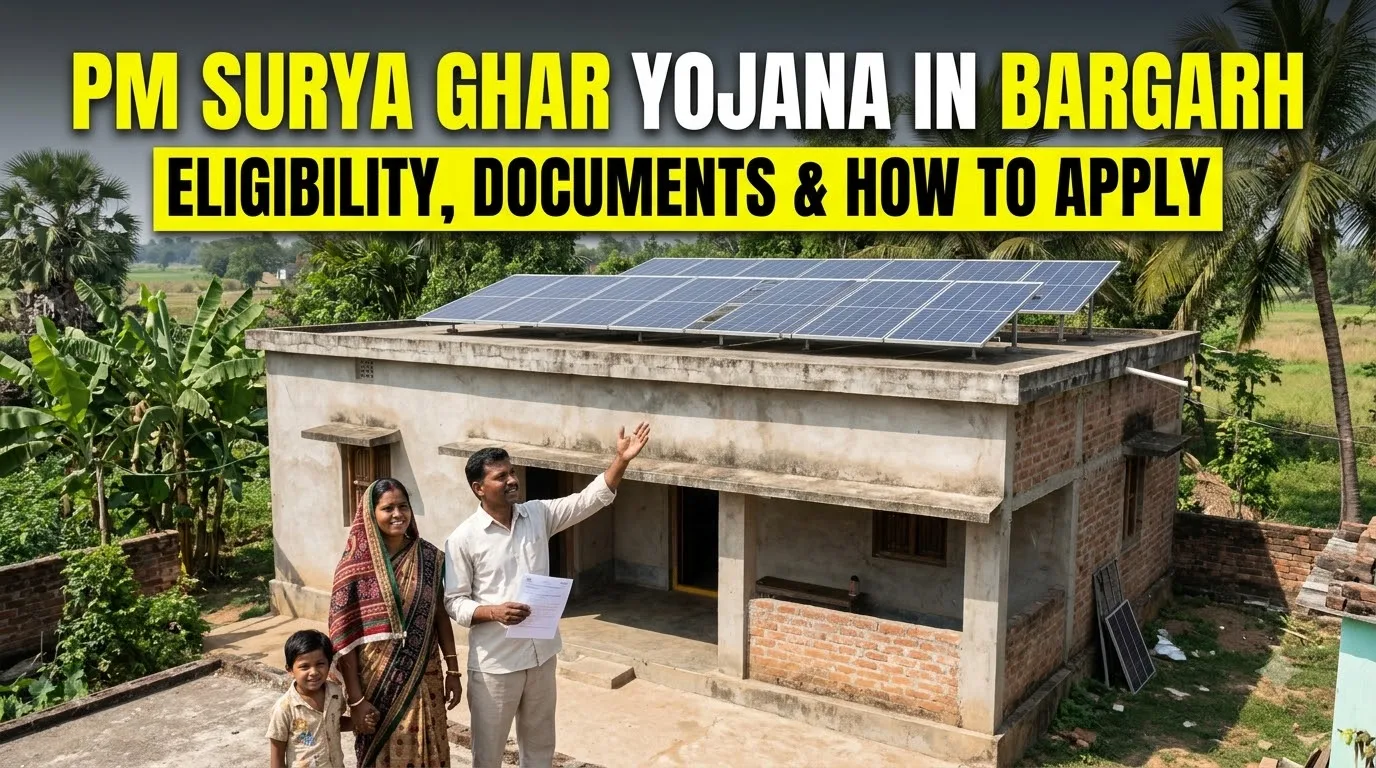
For eligible homes, the PM Surya Ghar subsidy is the single biggest reason solar in Odisha is worth it. With up to ₹78,000 back on a 3 kW system and a possible state subsidy on top, the effective cost falls by a third or more. Without subsidy the payback may be six to eight years; with it, closer to four to six. Read how to claim: PM Surya Ghar eligibility, documents and how to apply.
Loans and EMI: can you go solar without paying upfront?
Many families use a bank loan so that the monthly instalment is close to the bill saving. When this works, solar in Odisha is effectively cost-neutral from day one and profitable once the loan ends. See the detailed guide solar loan in Odisha with EMI tables.
Hidden factors that affect whether solar is worth it
- Quality: low-grade panels or inverters reduce generation and increase repair costs.
- Shadow: even small shadows can cut output; a shadow study before installation is vital.
- Orientation and tilt: south-facing at about 15–25° suits Odisha.
- Cleaning: dust can cut output by several percent if panels are neglected.
- Net-metering rules: they determine how surplus units are credited.
- Warranty and service: ensure support for 25 years, not just one.
Environmental value of solar in Odisha
Each unit of solar power replaces electricity that is largely produced from coal. A 3 kW system avoids roughly 3 tonnes of CO₂ every year (based on an average grid emission factor), which adds up to about 75 tonnes over 25 years. While this does not appear on your bill, it is a real benefit for your family and community.
Examples: is solar worth it in Odisha for these homes?
| Profile | Verdict | Reason |
|---|---|---|
| Family of four in Bargarh, 340 units/month, own terrace | Worth it | 3 kW with subsidy, payback ≈ 5 years |
| Tailor’s shop in Sambalpur, 450 units/month, daytime use | Strongly worth it | 4–5 kW, fast payback |
| Tenant with no roof rights, 120 units/month | Not now | No consent, low use |
| Home with heavy shadow all day | Possibly not | Poor generation; survey needed |
| Farmer with diesel pump, 120 irrigation days | Worth it | Solar pump removes fuel cost |
How to make sure solar in Odisha is worth it for you
Read the master guide solar in Odisha and our pages for solar panel price in Bargarh and the best solar company in Odisha for homes. Solar Harvest India offers a free survey — call +91-9438018877.
- Check your bills and note monthly units.
- Book a free survey and shadow study.
- Get an itemised written quote with named brands.
- Confirm subsidy eligibility and process.
- Compare at least two quotes using our 10 questions.
- Choose a company that also offers maintenance.
- Keep the plant clean and monitored — see solar panel maintenance in Odisha.
Frequently Asked Questions
If you use more than about 150–200 units a month and own your roof, yes. A 1–2 kW system can still give good savings and qualifies for subsidy.
Roughly 4–6 years after subsidy for most homes; businesses with daytime load can pay back in about 3–5 years.
Often yes, but payback is longer. Subsidy brings the payback down by a year or more.
Your saving per unit would drop, but equipment is paid for and keeps producing; most analyses still favour solar for typical consumption.
An on-grid system will not run during cuts. A hybrid system adds backup; savings remain but the cost is higher.
Yes. Solar Harvest India offers a free survey and a written proposal showing your estimated savings and subsidy.